
Baseball live betting lines master in-game markets
In-play wagering on MLB offers analytical bettors a distinct edge over traditional pre-game markets. The slow pace and predictable inning structure create multiple decision points where sharp bettors can exploit shifting odds. This guide breaks down pitcher analysis, bullpen evaluation, and situational factors that drive profitable in-play decisions.
BetWhale provides US bettors with competitive live baseball betting lines across all major leagues. The platform delivers real-time odds updates, pitch tracking integration, and market variety including alternate run lines and team totals. Minimum stakes start at $1 per wager, allowing proper bankroll management across multiple in-game positions. Average RTP on MLB markets reaches 96.5%, keeping more value in players’ hands compared to competitors.
The baseball live betting advantage
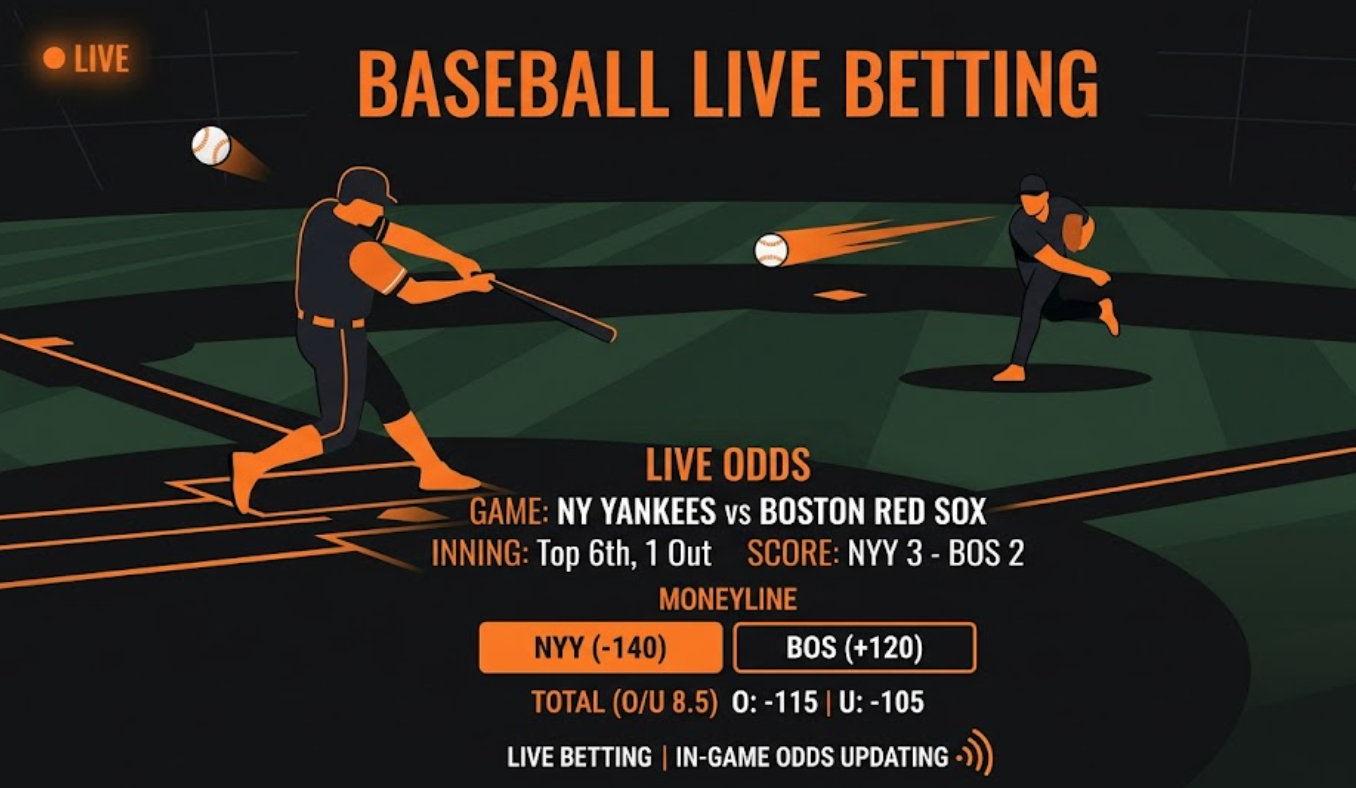 MLB differs fundamentally from other sports in real-time wagering contexts. Each at-bat creates a discrete event with measurable outcomes, allowing bettors to process information systematically rather than reacting to continuous action. The slow pace analytical advantage means you have time between pitches to evaluate situations properly.
In-play MLB wagering rewards patience and statistical understanding. Starters face the order multiple times, bullpen usage follows patterns, and situational dynamics create identifiable high-leverage spots. The predictable inning structure allows for planning rather than reactive wagering. Sharp bettors exploit these windows while recreational players chase action indiscriminately.
Nine innings of opportunity
Each inning represents a fresh market cycle with recalculated odds. Early innings focus on starter performance and establishing game tempo. Middle innings reveal fatigue indicators and potential bullpen timing decisions. Late innings shift emphasis toward late game leverage situations and closer deployment patterns.
| Inning Range | Primary Focus | Market Opportunity |
|---|---|---|
| 1-3 | Starter command | First five innings markets |
| 4-6 | Pitch count monitoring | Run line movement |
| 7-9 | Bullpen deployment | Next run props |
Stats-driven decision making
In-play MLB wagering demands real-time statistical processing. Pitch velocity trends, strike percentage changes, and exit velocity data signal shifts before they appear in the scoreline. Effective bettors track these metrics alongside traditional box score statistics for complete game understanding.
Key performance indicators:
- Fastball velocity delta — drops of 2+ mph signal fatigue
- Strike zone accuracy — declining first-pitch strike rate indicates command loss
- Swing rate changes — batters sitting on specific pitches exploit patterns
- Exit velocity trends — hard contact percentage reveals offensive pressure
Statcast data provides deeper insight into true performance levels. A pitcher allowing soft contact despite traffic on bases holds more value than surface stats suggest.
Starting pitcher live analysis
The starter controls early-game dynamics and creates the foundation for in-play wagering decisions. Evaluating pitcher performance requires attention to subtle indicators beyond runs allowed. Command breakdown often precedes damage by multiple batters, creating wagering windows. Win probability model calculations shift dramatically based on starter effectiveness.
Live lines react to scoring plays, but sharp bettors identify command issues earlier. A starter walking the leadoff man or falling behind in counts signals trouble before runs cross the plate. These early warnings create value opportunities for attentive bettors.
Early inning dominance signs
Strong starting performances display consistent patterns recognizable from the first inning. Pitchers working efficiently through the order demonstrate command that typically sustains through their outing.
Dominance indicators:
- First-pitch strikes above 65%
- Three-pitch strikeouts and quick outs
- Consistent velocity through third inning
- Inducing weak contact on hitter counts
When a starter displays these characteristics, strike zone control remains high, supporting under bets on totals.
When starters lose effectiveness
Pitch count threshold analysis reveals when starters approach decline. Most pitchers show measurable performance drops after reaching certain pitch counts. Tracking historical performance by pitch count brackets improves prediction accuracy. Live lines adjust slowly to fatigue indicators — a starter allowing baserunners in the fifth while approaching 80 pitches often continues facing batters despite diminished effectiveness.
| Warning Sign | Meaning | Betting Response |
|---|---|---|
| Velocity drop 2+ mph | Fatigue affecting arm | Consider over |
| Walking batters | Command degradation | Evaluate hook timing |
| Hanging breaking balls | Grip strength declining | Back opposing team |
Hook timing predictions
Anticipating when managers remove starters creates significant wagering edges. Modern bullpen usage follows increasingly predictable patterns based on pitch counts and matchup considerations.
Removal factors to track:
- Pitch count relative to season average
- Third time through order penalty concerns
- Current bullpen state and availability
- Upcoming schedule density
Profitable MLB live markets
Beyond standard moneylines and run lines, MLB offers diverse in-play markets where sharp players find overlooked value. These secondary markets receive less attention from recreational bettors, creating pricing inefficiencies. Live betting baseball successfully requires exploring these alternatives.
Alternate run lines
Standard run lines sit at -1.5 for favorites, but alternate lines offer flexibility. Adjusting the spread creates different risk-reward profiles suited to specific game situations.
Alternate run line applications:
- Buying runs (+2.5, +3.5) — protects value when backing underdogs
- Selling runs (-2.5, -3.5) — captures extra juice on strong favorites
- Live run line strategy — adjusting positions as game develops
Team totals in-play
Team-specific totals isolate analysis to one side. This proves valuable when confident about one team’s output while uncertain about the other. Inning totals betting extends this concept to specific innings.
Team total considerations:
- Remaining at-bats and lineup position
- Weather impact on ball flight
- Park dimensions scoring impact
Inning props & specials
Next run propositions and situational props offer concentrated value in specific spots. These markets demand precise timing but reward accurate reads.
| Situation | Prop Opportunity | Edge Source |
|---|---|---|
| Bases loaded, 1 out | Team to score next | High conversion rate |
| Fatigued starter, order top | First three batters prop | Lineup timing |
| Reliever just entered | First batter result | Cold arm adjustment |
The bullpen factor
Bullpen state often determines late-game outcomes more than starting pitching. Understanding closer availability impact, reliever workload patterns, and matchup advantages creates edges in middle and late innings. Bullpen depth evaluation requires tracking usage across entire series, not just single games. High-leverage situation management separates contending teams from pretenders.
Fresh arms vs fatigued relievers
Usage tracking reveals when relievers approach diminished effectiveness. Pitching on consecutive days or throwing high pitch counts creates fatigue that impacts performance. Books adjust slowly to these situations, creating windows for informed bettors.
❌ Fatigue indicators
- Third consecutive day available
- 30+ pitches within previous 48 hours
- Back-to-back high-stress appearances
- Velocity trending down over recent outings
Conversely, well-rested bullpen arms with favorable matchups offer reliability that markets may undervalue.
Matchup-based pitching changes
Platoon advantages drive many mid-inning pitching changes. Managers bring lefty specialists to face left-handed hitters. Understanding runners in scoring position scenarios helps anticipate these changes.
Matchup considerations:
- Batter vs pitcher historical data
- Pitch type vulnerabilities
- Platoon splits for current batter
Setup man & closer dynamics
Save situations follow scripts most teams adhere to rigidly. Closers enter ninth innings with leads of three runs or fewer. Understanding when teams deviate reveals game-state information before lines adjust.
Lineup & batting order insights
Order construction and lineup position create predictable patterns throughout games. Knowing when the top of the order returns and which platoons are in play allows anticipation of offensive surges. The two-out rally phenomenon occurs more frequently when quality hitters are due, making order tracking essential for next run proposition wagers.
Top of the order returns
Quality of at-bats varies dramatically through the lineup. Top-of-order batters (slots 1-4) face more critical situations and feature higher-quality hitters. Timing the order’s return identifies potential scoring opportunities that markets may not fully price.
| Lineup Position | Role | Live Implication |
|---|---|---|
| 1 | Table setter | Rally starter |
| 2-3 | Best hitters | Prime run production |
| 4-5 | Power | Extra base potential |
| 6-9 | Depth | Lower scoring expectation |
Platoon advantages in-play
Lineup construction changes during games create platoon shifts. When a left-handed reliever enters to face right-handed batters, the offensive team gains platoon advantage. Historical splits show right-handed hitters produce roughly 15-20% better offensive numbers against southpaws, making these matchups statistically significant. Smart managers counter with double-switches, but roster limitations often force unfavorable platoon situations that sharp bettors exploit before lines adjust.
Pinch hitter impact moments
Late-game substitutions change probability calculations. A quality pinch hitter replacing a weak-hitting pitcher can meaningfully shift expected run production.
High-leverage pinch hit situations:
- Pitcher’s spot with runners on base
- Lefty bat needed against right-handed pitcher
- Power hitter for home run opportunity
Game state live strategies
Different game situations demand different wagering approaches. Tie games, blowouts, and extra innings each present unique market dynamics. Adapting your baseball live betting strategy to game state maximizes value extraction. Weather mid-game adjustment factors also influence scoring expectations, particularly wind shifts that affect ball flight.
Tie games in late innings
Tie games in seventh inning or later create maximum uncertainty and often maximum value. Both teams deploy their best arms, creating elite pitcher versus batter battles. Managers make aggressive moves they would avoid in lopsided contests, burning high-leverage relievers without hesitation. These chess matches between dugouts create predictable pitching sequences that informed bettors can anticipate.
Tie game betting factors:
- Remaining bullpen quality for both teams
- Order position and upcoming matchups
- Home field walk-off advantage
Home teams hold structural advantages in tie games since they have the final opportunity to win with a single rally.
Blowout & garbage time value
Large leads early create “garbage time” where both teams conserve resources. Starters get pulled earlier and lesser relievers enter. Defensive intensity drops noticeably when outcomes feel predetermined, leading to extra base hits and extended innings. Teams trailing heavily often experiment with position players pitching, virtually guaranteeing additional runs cross the plate.
| Situation | Opportunity | Logic |
|---|---|---|
| Team down 7+ runs | Team total over | Mop-up pitchers allow runs |
| Early blowout | Alternate +4.5 | Just need to narrow gap |
| Starter pulled early | Game total over | Inferior arms both sides |
Extra innings betting
Modern MLB rules place a runner on second base to start each extra inning. This rule dramatically increases scoring probability and creates unique opportunities. Strategic decisions shift entirely with free baserunners, as sacrifice bunts and intentional walks become standard operating procedure. Pitchers face extreme pressure knowing any mistake likely scores the ghost runner from second base.
Extra inning facts:
- 60%+ of extra innings feature at least one run
- Free runner changes sacrifice bunt calculus
- Teams average more runs per extra inning than regulation
Baseball live betting discipline
Discipline separates profitable bettors from recreational losers. With games occurring daily throughout a six-month season, opportunities abound. This abundance creates temptation to bet without edge, destroying bankrolls through accumulated vig. Mastering baseball live betting demands patience, selectivity, and emotional control throughout the marathon MLB season.
Single-game exposure limits
Limiting exposure to any single game protects against variance. Even strong analytical reads fail regularly in MLB. A 60% win rate represents excellent performance, meaning 40% of even good bets lose. Proper bankroll management prevents any single loss from derailing long-term profitability.
Exposure management principles:
- Cap any single game at 2-3% of bankroll
- Multiple small bets preferable to one large bet
- Set session loss limits before games start
- Track all bets for honest performance evaluation
Value recognition over action
Wagering because games are on represents losing behavior. Sharp bettors wait for situations where analysis suggests odds mispricing, then act decisively.
Value recognition checklist:
- Does my analysis suggest different probability than implied odds?
- Is the edge large enough to overcome vig?
- Am I betting from analysis or boredom?
Mistakes that sink baseball bettors
Common errors destroy bankrolls regardless of analytical ability. Understanding these pitfalls helps avoid them. MLB variance challenges emotional resilience more than most sports. A quality bet can lose many times consecutively through random chance alone. Even sharps with proven track records experience brutal losing streaks that would break undisciplined bettors. Recognizing these patterns as normal rather than evidence of broken strategy keeps long-term profitability intact.
Trusting small sample sizes
Early-season statistics mislead consistently. A batter hitting .400 in April will almost certainly regress toward career norms. A pitcher with 1.00 ERA through three starts will allow more runs. Small samples create illusions that trap reactive bettors chasing recent performance.
❌ Sample size red flags
- Player “hot streak” under 50 at-bats
- Pitcher ERA sample under 25 innings
- Team record through first 20 games
- Head-to-head records under 10 matchups
Rely on larger samples and underlying metrics rather than recent results. Peripheral statistics predict future outcomes better than traditional counting stats.
Fading teams after bad innings
Recency bias causes overreaction to immediate events. A team allowing 5 runs in one inning hasn’t become fundamentally worse — markets sometimes overadjust.
After bad innings — correct approach:
- Evaluate whether actual ability changed (usually no)
- Consider if opponent is depleted from big inning
- Look for value on the team that just allowed runs
Essential MLB live resources
Quality information sources separate winning bettors from losers. The information advantage in baseball live betting comes from speed and interpretation. Getting data faster than markets adjust creates opportunities that disappear quickly. Professional bettors invest in multiple data streams and cross-reference sources to confirm signals before placing wagers. Building a reliable toolkit takes time but pays dividends throughout each MLB season.
Real-time pitch data feeds
Pitch-by-pitch data reveals game dynamics before they manifest in outcomes. Velocity trends and location patterns signal changing performance levels. Quality data feeds deliver this information with minimal delay, enabling faster decision-making than competitors.
| Metric | What It Shows | Betting Use |
|---|---|---|
| Velocity by pitch | Arm fatigue | Anticipate decline |
| Spin rate changes | Grip issues | Breaking ball effectiveness |
| Release point | Command status | Walk probability |
| Called strike % | Umpire zone | Count advantage prediction |
Integrating this data requires practice, but builds intuition over time for identifying abnormal readings.