
US Open tennis predictions — picks & betting odds at BetWhale
The 2026 US Open at Flushing Meadows is the most wagered-on Grand Slam of the season, and the gap between sharp bettors and casual ones comes down to one thing: surface-specific data. Carlos Alcaraz defends the men’s title, Aryna Sabalenka chases a historic three-peat, and the Laykold hard courts of Queens sort genuine contenders from ranking-inflated pretenders faster than any other Slam. BetWhale builds every prediction on Night session atmosphere, summer swing form, and bracket path — not ATP/WTA standings. From Fan Week qualifiers on August 23 to the men’s final on September 13, this guide covers every angle before you place a dollar.
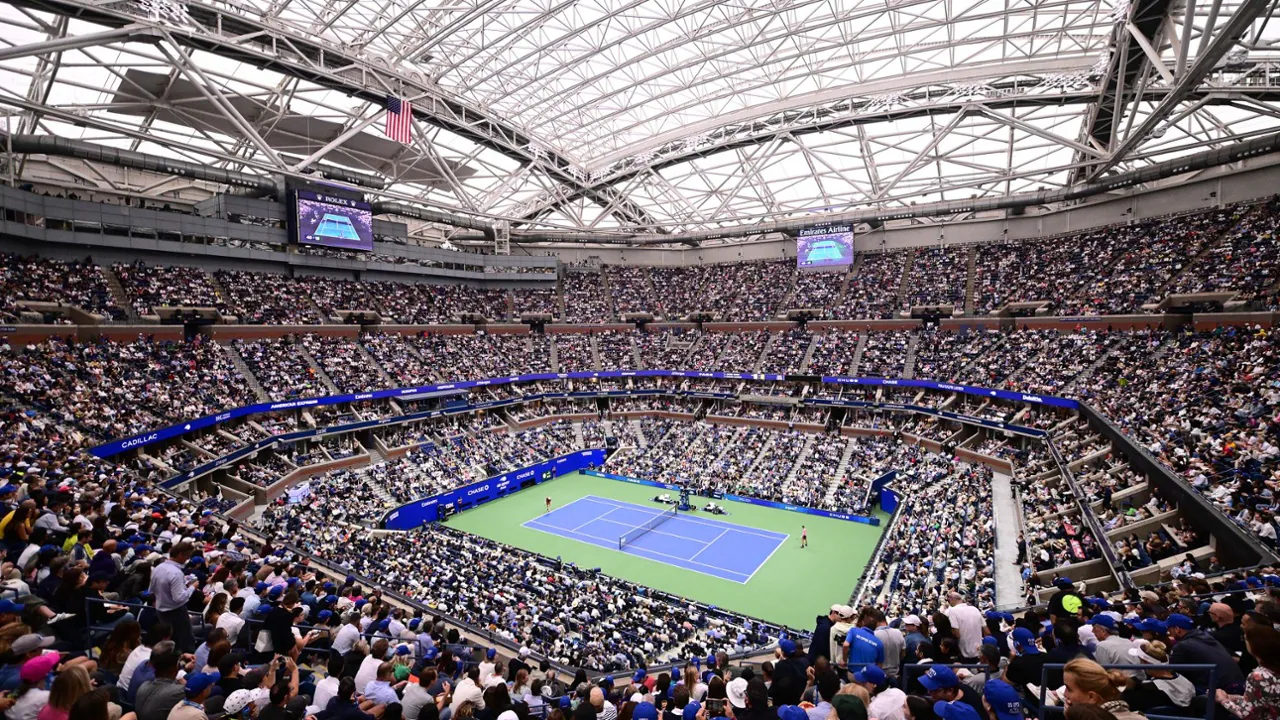
US Open 2026 — everything bettors need before placing
The tournament runs at the USTA Billie Jean King National Tennis Center in Queens. Fan Week opens August 23, the main draw starts August 30, and finals close the calendar September 12–13 with a prize pool exceeding $90M — the largest in tennis history. BetWhale’s Flushing Meadows betting analysis treats this event differently from every other Grand Slam because the variables that decide outcomes here simply don’t exist anywhere else on tour.
Arthur Ashe, Armstrong & night sessions
Arthur Ashe Stadium holds 23,771 fans and has a retractable roof that traps crowd noise into a wall of sound unlike anything at Roland Garros or Wimbledon. The Arthur Ashe night session impact on seeded players is one of the most measurable edges in tennis betting — seeds in Night slots face an additional +8% upset probability compared to the same matchup on an outer court in daylight. The causes are documented: crowd noise disrupts serve rhythm, late scheduling adds physical fatigue, and lower-ranked opponents feed off the atmosphere in ways that rarely happen at quieter venues. BetWhale assigns a Night Session Tier flag to every Ashe match before any other analysis runs.
Laykold surface & New York summer conditions
Laykold sits between Roland Garros clay and Wimbledon grass on the pace scale, and it rewards aggressive baseliners with a reliable first serve under pressure. New York in August runs 29–32°C with humidity between 50–65%, which directly shapes performance stats in ways that general hard court numbers don’t capture. BetWhale computes a separate Flushing Meadows performance score for every player — general ranking is a secondary input, while surface-specific win percentage and serve pressure performance metrics under heat conditions are the primary drivers of every published pick.
US Open 2026 men’s predictions
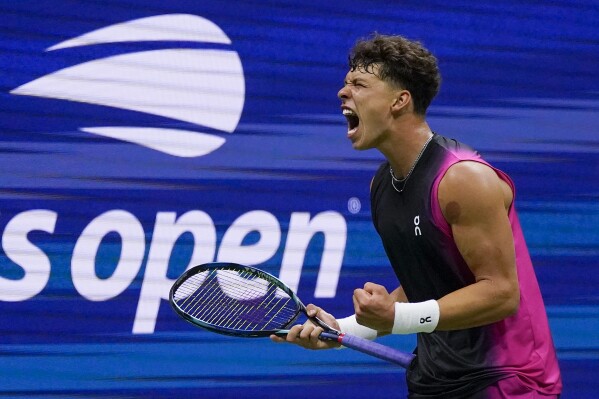
The 2026 men’s draw opens with Alcaraz as defending champion and Sinner as the most motivated challenger on the hard court calendar. Below the top two, Djokovic’s entry status and the American contingent create real value across multiple markets that the outright winner price ignores.
Carlos Alcaraz — defending champion prediction profile
Alcaraz (ATP No. 1) won the 2025 final against Sinner 6-2, 3-6, 6-1, 6-4, adding a second US Open title to his 2022 crown, and completed his Career Grand Slam at AO 2026. The New York crowd is the ideal setting for his explosive style — he plays his sharpest tennis when the stadium is loudest, and Ashe delivers that every round. Defending odds are structurally tight, so BetWhale targets method props in early rounds for better risk/reward than outright winner markets at current prices.
Jannik Sinner — redemption on hard courts breakdown
Sinner (ATP No. 2) has lost three straight Grand Slam finals against Alcaraz, and the US Open is the only Slam missing from his Career Grand Slam. Hard court is his statistically strongest surface, and Flushing Meadows 2026 sits at the peak of his motivation calendar — BetWhale rates him as the highest-confidence challenger play in the men’s draw. His Cincinnati form is the final check before confirming any outright position, since draw bracket path difficulty and serve pressure numbers in New York heat need verification before the main draw begins.
Novak Djokovic — New York history & strategic entry watch
Djokovic (No. 3) is a four-time US Open champion who turns 41 during the 2026 tournament, and his entry is not confirmed until close to Fan Week due to strategic schedule management. BetWhale holds all Djokovic futures positions until entry is confirmed — the conditional play is simple: confirmed entry plus a favourable draw half equals an immediate upgrade to value pick status. A bracket that keeps him away from Alcaraz and Sinner until the final is the scenario that makes his Ashe record actionable again.
American hopefuls & dark horse US Open picks
Fritz, Shelton, Paul, and Tiafoe all carry a measurable home crowd advantage in New York, with BetWhale’s model showing a +4–6% win rate boost for Americans in R1 and R2. Draper is on an improving hard court trajectory that puts him in genuine QF conversation, and Zverev remains a consistent SF/QF performer whose best tennis reliably appears in the second week. Fritz QF reach props have produced positive returns across multiple consecutive US Open cycles and represent the strongest annual recurring edge outside the top three.
| Player | 🎾 Ranking | 🏆 Best USO result | 💡 Confidence tier | 📊 Key edge |
| Carlos Alcaraz | No. 1 | 🥇 Champion (2022, 2025) | High — early round props | Crowd energy + H2H vs Sinner |
| Jannik Sinner | No. 2 | 🥈 Runner-up 2025 | Highest — challenger play | Hard court stats + motivation peak |
| Novak Djokovic | No. 3 | 🥇 4× champion | Conditional — entry watch | Draw path + Ashe history |
| Taylor Fritz | No. 5 | 🏅 QF | Strong — annual value | Home crowd + QF props |
| Ben Shelton | No. 7 | 🏅 QF | Strong — R1/R2 value | Serve power + home crowd |
| Alexander Zverev | No. 4 | 🏅 SF | Medium — second week | Consistent Slam depth |
US Open 2026 women’s predictions
The women’s US Open draw features three former US Open champions in the top four seeds, making surface fit and summer hard court form indicators the primary tools for separating real contenders from ranking-inflated entries. BetWhale runs the same Flushing Meadows model on the women’s draw — Night session scheduling and Cincinnati results carry equal weight on both sides of the bracket.
Aryna Sabalenka — three-peat hard court champion analysis
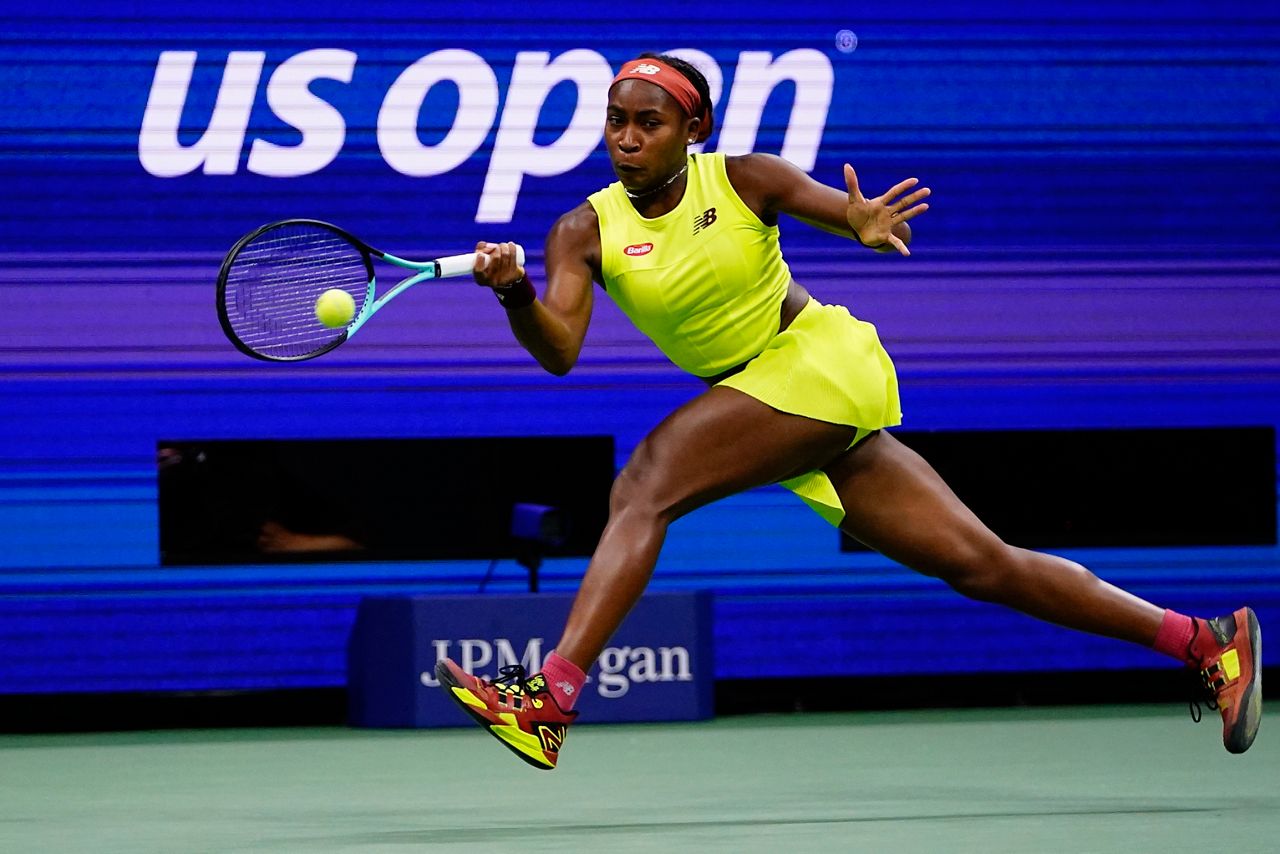 Sabalenka (WTA No. 1) is the first player since Serena Williams in 2013–14 to win back-to-back US Open titles, and all four of her Grand Slam titles have come on hard courts. Her outright winner odds at a three-peat chase price leave little value for the win — SF and QF reach props pay better at current market pricing, and that’s where BetWhale positions most bankrolls for 2026 US Open tennis predictions.
Coco Gauff — home city champion prediction profile
Gauff (WTA No. 4) won the US Open in 2023 and has never played a flat match at Flushing Meadows. The home crowd advantage in New York gives her a psychological edge that no other WTA player holds at any Slam — New York treats her as a local icon, and the crowd energy consistently prices her below her true win probability. BetWhale rates Gauff as the best annual WTA value bet at the US Open, with futures odds that underestimate her actual chances every season she arrives healthy.
Iga Swiatek — summer hard court form watch
Swiatek (WTA No. 2) holds six Grand Slam titles and confirmed a grass breakthrough with a 6-0, 6-0 win at Wimbledon 2025, but the US Open has historically been a less dominant event for her than Roland Garros. Cincinnati 2026 is BetWhale’s key input for her confidence tier — a strong Cincinnati result confirms Laykold-specific form and triggers an immediate odds upgrade in the model. Without that Cincinnati signal, she stays at a medium confidence tier regardless of ranking position entering the main draw.
Rybakina, Anisimova & dark horse women’s picks
Rybakina (No. 3) won AO 2026 and carries an elite fast hard court profile that makes her the most dangerous player in the draw on any day the Laykold plays at its quickest. Anisimova (No. 6) reached the 2025 final before losing to Sabalenka, and her revenge narrative in 2026 creates early futures value the market hasn’t fully priced. Andreeva (No. 8) at 18 is the Night session debutant watch — her aggressive baseline performance edge on fast surfaces at night is exactly the profile that outperforms seedings on Ashe.
| Player | 🎾 Ranking | 🏆 Best USO result | 💡 Confidence tier | 📊 Key edge |
| Aryna Sabalenka | No. 1 | 🥇 2× champion (2024–25) | High — SF/QF props | Hard court dominance |
| Coco Gauff | No. 4 | 🥇 Champion (2023) | Highest — annual value | Home crowd + baseline growth |
| Iga Swiatek | No. 2 | 🏅 SF | Medium → High post-Cincinnati | Cincinnati form signal |
| Elena Rybakina | No. 3 | 🏅 QF | Strong — fast court days | Power serve on Laykold |
| Mirra Andreeva | No. 8 | 🏅 R4 | Dark horse — Night session | Youth + aggressive baseline |
| Amanda Anisimova | No. 6 | 🥈 Finalist 2025 | Dark horse — revenge narrative | Finalist experience + motivation |
US Open first round predictions — BetWhale’s full day-one coverage
The first round of the US Open is the highest-volatility betting day in Grand Slam tennis, with a 128-player draw, full qualifying field, and Night sessions on Arthur Ashe all compressing into the same 48-hour window. BetWhale publishes a full card of first round predictions within 24 hours of each order of play announcement, with the Night session flag applied to every Ashe match before prices are finalised.
Why first round US Open predictions carry unique betting value
The top-10 seeds lose in Round 1 at an 11% rate — the highest first round upset probability among all four Grand Slams. Night session scheduling on Ashe adds a further +8% upset probability on top of that baseline for any seeded player in the night slot, creating a combined scenario that regularly misprices match odds. BetWhale’s R1 model checks court assignment, opponent Laykold surface profile, and physical condition after the summer swing — three inputs that consistently outperform a ranking-only approach in the opening round.
Qualifier & lucky loser upsets — first round value hunting
Qualifiers win their first round matches at the US Open 14% of the time — the highest qualifier upset figure on tour. Players who came through qualifying without competing in Cincinnati or Indian Wells arrive at the main draw fresher than most of their seeded R1 opponents, and late draw slot qualifiers against fatigued seeds are among the best-value bets of the entire fortnight. BetWhale tracks qualifier results throughout Fan Week (August 23–29) and publishes alerts as part of the first round coverage, with crowd noise performance impact factored in for any Ashe assignments.
| 🎾 Match type | 📊 Seed win rate | ⚡ Upset probability | 💡 BetWhale flag |
| Ashe Night — top-10 seed | 81% | 19% | 🚩 Night session +8% |
| Outer court day — top-10 seed | 90% | 10% | ✅ Standard model |
| Qualifier vs seed (any court) | 86% seed win | 14% qualifier upset | 🔍 Fatigue check applied |
| Lucky loser vs seed | 88% seed win | 12% LL upset | 🔍 Surface profile check |
Tennis US Open predictions — full betting markets guide at BetWhale
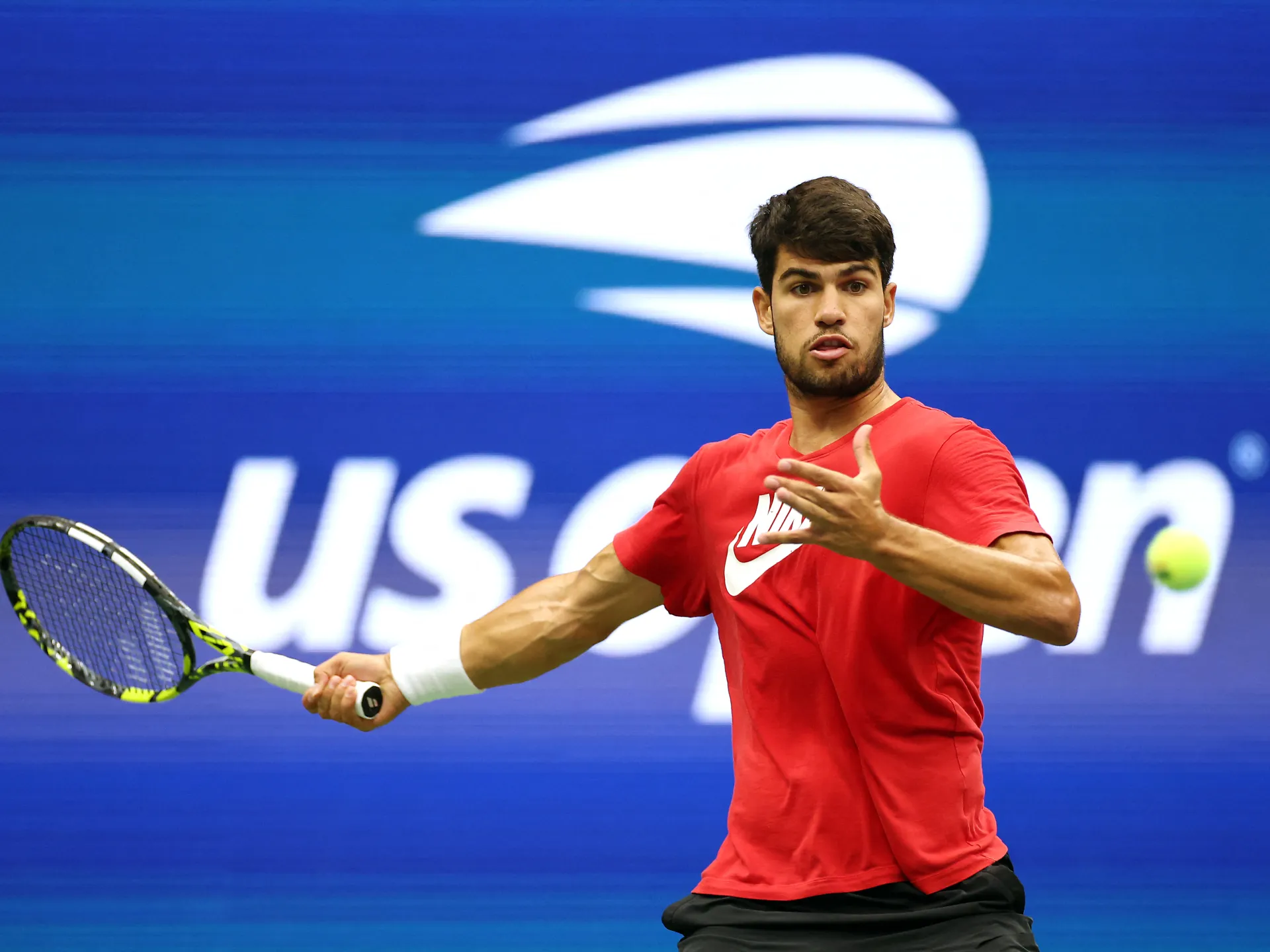
BetWhale covers every major US Open betting market from tournament futures to live in-play, and timing each market correctly matters as much as picking the right player. Different entry windows carry different levels of edge, and the wrong timing costs value even when the underlying pick is correct.
🏆 Tournament futures — Cincinnati window timing
The highest-ROI window for futures is post-Cincinnati in late August. Six of the last ten US Open champions reached at least the SF in Cincinnati that same season, making the Cincinnati form signal the strongest single pre-tournament indicator in the model. After Cincinnati, Laykold-specific form is confirmed but public money hasn’t yet fully corrected the odds — that gap is where the value sits. BetWhale publishes initial futures picks in July and updates them within 24 hours of Cincinnati results.
🎯 Daily match picks & live betting
Night session order of play is released approximately 24 hours before each match day, and BetWhale updates picks after every announcement with Night/day scheduling adjustments applied per match. The draw bracket path difficulty check runs alongside scheduling — a seed navigating a loaded quarter gets a confidence tier downgrade regardless of ranking. For live in-play momentum swings, the optimal entry point is after a first-set break, when odds shift 35–50% and the Ashe crowd has already established which player it’s carrying through the night. Tiebreak frequency analysis on Shelton and Fritz matches specifically shows above-average rates, making “first set tiebreak — yes” one of the most consistently value-positive niche props at Flushing Meadows.
| 🎰 Market | ⏰ Best timing | 📊 Edge level | 💡 BetWhale action |
| 🏆 Tournament winner | Post-Cincinnati (late August) | High | Futures tracker update |
| 🎯 Match winner | 24h post order of play | Medium–High | Daily picks card |
| ⚡ First set tiebreak | Match preview window | High (niche) | Prop alerts — Fritz/Shelton |
| 🔴 Live match | Post-first-set break | Very high | Night session framework |
Summer hard court swing — road to US Open 2026
The summer hard court season is the most predictive data window in the BetWhale model — Washington, Montreal/Toronto, and Cincinnati collectively determine how confidence tiers are assigned before the main draw begins. Players with four to six warm-up matches in that window arrive in optimal shape; eight or more matches triggers a fatigue flag, and one or two triggers an underprepared flag. Both are negative inputs for confidence tier assignment, and both are published in BetWhale’s summer swing tracker from July onward.
| 📅 Event | 🗓️ Timing | 📊 Model weight | 💡 Signal type |
| 🎾 Wimbledon | Early July | Low | Fitness baseline only |
| 🌆 Washington Citi Open | Late July | Medium | Hard court warm-up |
| 🍁 Montreal/Toronto | Early August | Medium–High | Hard court depth check |
| 🏆 Cincinnati Masters | Mid-August | Very high | Laykold form confirmed |
| 🩺 Injury tracker | Aug 23+ (Fan Week) | Critical | Entry/withdrawal status |
US Open 2026 full schedule — BetWhale predictions planning guide
Knowing when to bet matters as much as picking the right player. The US Open calendar creates distinct entry windows for different market types, and BetWhale publishes predictions timed specifically to each one — July futures, post-Cincinnati updates, draw release bracket analysis, daily R1 cards, and live Night session frameworks all run on separate schedules.
| ⏰ Timing | 🎰 Market | 💡 BetWhale action |
| 📅 July | Tournament futures | Initial picks published |
| 🏆 Post-Cincinnati (Aug) | Futures update | Confidence tier upgrades |
| 📋 Draw release (~Aug 27) | Bracket futures + R1 prep | Updated picks within 4 hours |
| 🎾 Aug 30 (main draw) | R1 match picks | Full card 24h after order of play |
| 🔴 Live (any round) | In-play match bets | Night session framework active |
| 📊 R16 onward | Match + outright | Highest-confidence pick window |
Responsible betting & US Open tennis predictions disclaimer
The US Open carries the highest first-round upset rate of any Grand Slam, and Night sessions on Arthur Ashe make outcomes unpredictable across every round. Heat retirements are a genuine risk throughout August and early September, not a theoretical footnote. BetWhale supports responsible gambling on every page of the platform — every prediction is an analytical tool built on data, not a guaranteed result. Set a bankroll limit before the tournament starts and treat no pick as a certainty regardless of odds or form.